







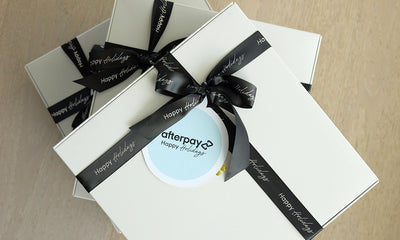


Client welcome gift hampers are curated gourmet gift boxes a company sends to a new client during onboarding, with the aim of making the first weeks of the relationship feel personal instead of transactional. A welcome hamper is not the same brief as a birthday or thank-you gift: it has to work at scale across a client list, land on a predictable date tied to a contract or kickoff call, and represent your brand to someone who hasn't decided yet whether they like working with you.
- Client welcome gift hampers land best when timed to contract signing or kickoff, not the first invoice.
- Edible Blooms' Gourmet Gift Hamper and Gourmet Hamper Large suit most B2B onboarding budgets without looking generic.
- Bulk client welcome gifts need a repeatable ordering process, not one-off manual orders per new account.
- Screening dietary requirements before dispatch matters more for corporate hampers than personal gifts, since one mistake undoes the goodwill.
Why client welcome gift hampers matter for onboarding
A new client forms most of their opinion about your business in the first 30 days. A corporate gift hamper for clients sent in week one signals that the relationship is a priority from day one, not an afterthought once the contract is signed and filed.
The stakes are different from a one-off personal gift. A welcome hamper program has to survive repetition — the fifth client this quarter should feel as considered as the first — and it has to hold up if a decision-maker unwraps it in front of colleagues. Generic snack boxes read as an afterthought; a gift hamper with a clear gourmet angle reads as intentional.
How to build a client welcome gift hamper program
Set a per-client budget tier before you order anything
Decide your tiers before the first order goes out, not client by client. Inconsistent spending is the fastest way for a client welcome program to look accidental rather than deliberate.
- Set a standard tier for most new accounts and a premium tier for enterprise or high-value contracts
- Cap the number of tiers at two or three — more than that becomes an admin burden
- Document the tier rules somewhere the whole account team can see them
- Review tiers annually against actual client lifetime value, not gut feel
Match the hamper to the industry and relationship stage
A welcome gift for a law firm client reads differently than one for a hospitality or creative-agency client. Match the tone of the hamper to how formal the relationship is expected to be.
- Choose a savoury-leaning option like a cheese and hamper combination for conservative industries (finance, legal, professional services)
- Choose a chocolate or dessert-forward box for creative, hospitality or retail clients where the relationship is more casual
- The Gourmet Gift Hamper works as a safe, broadly appropriate default across most industries
- Step up to the Gourmet Hamper Large for accounts where the contract value justifies a bigger first impression
- Avoid anything alcohol-forward as a default — reserve it for clients you already know drink and confirm no dietary or workplace restrictions apply
Write a gift card message that sounds like your team, not a template
The card is what gets photographed and forwarded internally at the client's office. A templated line kills the effect a hamper is meant to create.
- Name the client's business, not just their first name
- Reference the specific project or engagement starting, not a generic "welcome aboard"
- Keep it under three sentences — a long card reads as trying too hard
- Sign with the actual account manager's name, not the company name alone
- Skip sales language entirely; the hamper is doing that job already
Time delivery to the actual onboarding milestone
Most welcome hampers land wrong because the trigger date is vague. Tie dispatch to a specific, trackable event.
- Trigger the order on contract signing, not on the first invoice or first meeting
- Build in 2-3 business days of lead time so delivery isn't rushed same-day every time
- For interstate or remote clients, confirm delivery zones before promising a date
- Avoid sending during the client's own busy season if you know their calendar (end of financial year, peak retail, etc.)
Build a repeatable process for ordering across a client list
One-off manual ordering doesn't scale past a handful of accounts a month. A repeatable process is what separates a program from a habit that quietly stops.
- Assign one team member as the owner of the welcome-gift trigger, not "whoever remembers"
- Keep a running list of shipped addresses and gift tiers to avoid duplicate or missed sends
- For agencies or firms onboarding several clients a month, ordering corporate gifts in bulk for a client list removes the manual step of placing individual orders each time
- Set a recurring calendar reminder to audit the list quarterly for accuracy
Screen for dietary and allergy flags before dispatch
A client welcome gift that triggers an allergic reaction or gets binned unopened does more damage than sending nothing. This matters more for corporate hampers than personal ones because you're often gifting someone you've never met.
- Ask new clients about dietary preferences during the kickoff call, not after the gift ships
- Keep a simple tag system (standard, gluten-aware, alcohol-free) against each client record
- Default to a nut-declared, clearly labelled option when you have no dietary information at all
- Confirm office-wide gifts (shared with a team) don't assume everyone drinks or eats the same way
Track whether the gift moves the relationship needle
A welcome hamper is a cost with no guaranteed return unless someone checks whether it's working. Tie it to a metric you already track.
- Note which accounts received a welcome hamper against your existing renewal or churn data
- Ask account managers informally whether clients mentioned the gift on onboarding calls
- Track cost per new client against the size of the contract, not as a flat company-wide number
- Adjust the tier structure yearly based on what actually correlated with a longer relationship
Comparison: welcome hamper formats for client onboarding
| Option | Best for | Key limitation |
|---|---|---|
| Single hamper per client | Small client lists, high-touch accounts | Doesn't scale past a handful of sends a month |
| Bundled gift box packs (4-6 per pack) | Agencies onboarding several clients in the same period | Less individual customisation per client |
| Build-your-own hamper | Clients with known preferences or dietary needs | Takes longer to configure per order |
| Standing recurring order | Firms with a steady monthly intake of new accounts | Needs an owner to manage the trigger list |


An Edible Blooms client welcome hamper works best when the tier is fixed before ordering starts and the trigger date is contract signing, not the first invoice.
Common mistakes companies make with client welcome hampers
- Sending the same hamper to every client regardless of contract size — a tiered structure protects against both overspend on small accounts and underspend on major ones
- Skipping message personalization — a generic "welcome aboard" card reads as an automated touch, not a considered one
- Not asking about dietary restrictions until after the gift ships — this is the single most avoidable failure in a corporate hamper program
- Ordering same-day when the milestone was known weeks out — rushed same-day delivery works, but it signals the gift wasn't planned as part of onboarding
- Never measuring whether the gift correlates with retention — without tracking, a welcome hamper program runs on assumption indefinitely
FAQ
What's the best gift hamper for welcoming a new client in 2026?
A gourmet gift hamper in the mid-range tier, like Edible Blooms' Gourmet Gift Hamper, works for most B2B onboarding in 2026 because it reads as considered without looking like an over-spend on a first-time client. Step up to a larger hamper for enterprise accounts.
How much should a client welcome hamper cost?
Cost should be set by a fixed tier structure tied to contract value, not decided per client. Check current pricing on the Edible Blooms site when setting your tiers, since options vary by hamper size and contents.
Is it better to send a hamper or a gift card for client onboarding?
A physical hamper outperforms a gift card for onboarding because it's shared and photographed in the client's office, extending the brand impression beyond the decision-maker. A gift card gets used privately and forgotten.
How far in advance should client welcome hampers ship?
Trigger the order on contract signing with 2-3 business days of lead time so delivery lands in the first week without needing a same-day rush. Interstate clients need delivery zones confirmed before a date is promised.
Can client welcome hampers include alcohol for corporate clients?
Alcohol-inclusive hampers work for clients you already know drink, but they shouldn't be the default for a new client welcome kit. Confirm there's no workplace restriction before including wine or sparkling in the box.
Do client welcome hampers work for remote or interstate clients?
Yes, as long as delivery zones and timeframes are confirmed before the send date is promised to the account team. Same-day delivery availability varies by location, so remote and interstate clients need lead time built in.
What should the gift card message say for a new client welcome hamper?
Name the client's business and the specific project starting, keep it under three sentences, and sign with the account manager's real name. Skip sales language entirely — the hamper is already doing that job.
How do I order client welcome hampers in bulk for multiple new clients?
Assign one team member to own the trigger list and place orders on a set schedule rather than individually per client. Bulk ordering keeps tier consistency and avoids duplicate or missed sends across a growing client list.
One last thing
The accounts most likely to churn in year one are the ones where nobody outside the sales team ever hears from the company again after signing — a welcome hamper timed to the kickoff call is one of the few onboarding touches that reaches someone other than the primary contact, since it usually gets unwrapped in a shared office space. Set your tier structure once, tie the trigger to contract signing, and the program runs itself from month two onward.


